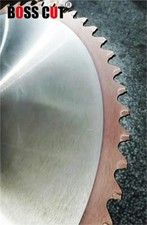
Extending the Life of Your TCT Saw Blades: When and How to Sharpen
If you've been cutting wood or panel products for a while, you already know this: a sharp blade is everything. The moment your saw starts acting up-pushing harder than usual, leaving rough or fuzzy edges, making weird noises, or vibrating-it's telling you something. Add burnt marks on the cut surface to that list, and there's no doubt: your TCT blade is dull.
So when should you sharpen it?
Don't wait until it smokes. As soon as you feel that resistance spike or see poor finish quality, pull the blade off. Running a dull blade doesn't just ruin your material; it overheats the carbide tips, and once that happens, no amount of sharpening will bring it back to full life.
Sharpening itself isn't a backyard job.
You need a proper automatic sharpening machine designed for carbide-tipped blades, and someone who knows what they're doing. The key is consistency-keeping the same tooth angle and tooth height across the whole blade. If one tooth is higher than the rest, that tooth takes all the load. If angles are off, the blade will pull sideways. Also, don't grind off too much material in one pass. Overheating the tip during sharpening is just as bad as overheating it during cutting-it softens the carbide, and a soft tip wears out fast.
Now, what about storage?
A sharp blade sitting in a damp corner or stacked under other tools won't stay sharp for long. Clean it before putting it away-get the resin and pitch off. A light coat of anti-rust oil on the steel body doesn't hurt either. Hang the blade vertically if you can. Don't lay it flat under a pile of heavy tools, or you'll end up with a warped blade that no amount of sharpening can fix. And keep the space dry. Rust on the steel body affects runout, and that kills cut quality too.
Bottom line: a TCT blade is a tool, not an heirloom. Use it, maintain it, sharpen it right, and store it properly. Do that, and it'll give you clean cuts for a long time.