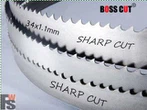
Saw Blade Basics: It's All About the Teeth and the Task
Hey, if you've ever tried to cut wood with the wrong blade, you know it's a frustrating mess. The secret to a clean cut isn't just power-it's the geometry of the blade. Most circular saw blades fall into two main camps based on their teeth.
Ripping blades have fewer, larger teeth and deep gullets to hog out material fast along the grain, leaving a rougher edge .
Crosscut blades, on the other hand, pack in more teeth with a shallower hook angle to slice cleanly across the grain for a smooth finish .
Material Matters
You've also got to match the blade to what you're cutting.
Standard wood blades are usually steel or carbide-tipped.
But if you're cutting metal or stone, you're looking at totally different beasts-like abrasive discs or diamond-rimmed blades for tile and concrete .
And for those fancy laminate or melamine jobs where chipping is a nightmare?
You'll want a high tooth count blade, often 80 teeth or more, designed specifically to leave a glass-smooth edge .
The Bottom Line
Don't just grab any blade off the shelf.
Check the tooth count and the grind-that's the shape of the individual teeth.
A combination blade is a decent "do-it-all" compromise for a home shop, but if you're doing production work, specialized blades pay for themselves in time and material saved .