1. Before operation, wear tight-fitting protective clothing, fasten the cuffs, and do not open the hem of the jacket. It is strictly forbidden to wear gloves. Do not wear, take off your clothes or wrap your body around the machine tool to prevent the machine from being twisted; you must wear a safety helmet , Braids should be put in the hat, no skirts, slippers.
2. Before driving, do a round-trip inspection of equipment.
3. Dry run for 10 minutes before working in winter to warm up all parts of the sawing machine.
4. Check whether there is oil in each lubrication system, and add oil to the guide rail surface and each lubrication point every shift.
5. Whether the coolant level is higher than two-thirds of the liquid standard.
6. Manually tensioned saw blade, the tension torque is 20-25N*m, just hear the rattle of the torque wrench or see the pointer reading.
7. Whether the jog saw blade is tape off. Run at low speed for 3-5 minutes, confirm that the lubrication, hydraulic, electrical systems and various parts are operating normally, and then start working.
8. Adjust the distance between the left and right guide arms according to the size of the workpiece to make them as close to the workpiece as possible. The clamping jaw can be adjusted 5-6mm wider than the workpiece.
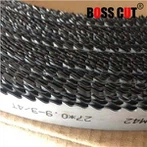
9. The specifications of the saw blade must meet the requirements. The saw blade teeth should be selected according to the shape and material of the material. The selection principles are as follows: ①Saw for large materials, and use coarse teeth for non-ferrous metals; ②Small materials, thin-walled tubes, high-strength hardness Materials and alloy steels should use fine teeth; ③Variable pitch saw blades are generally used for workpieces with large cross-section changes or bundled cutting to reduce vibration and noise during cutting and make cutting smooth.
10. When replacing the saw blade, disconnect the power supply to prevent accidents. When using a new saw blade, in order to improve the use effect, the saw blade must be "run-in".